
Low Volume Injection Moulding, 100 To 10,000 Real Parts
Aluminium bridge tooling lets you produce 100 to 10,000 genuine injection moulded parts in production grade polymer, at a fraction of hardened steel tooling cost and a fraction of the lead time. The right move when you need real product, not prototypes, but you do not yet need a million units.
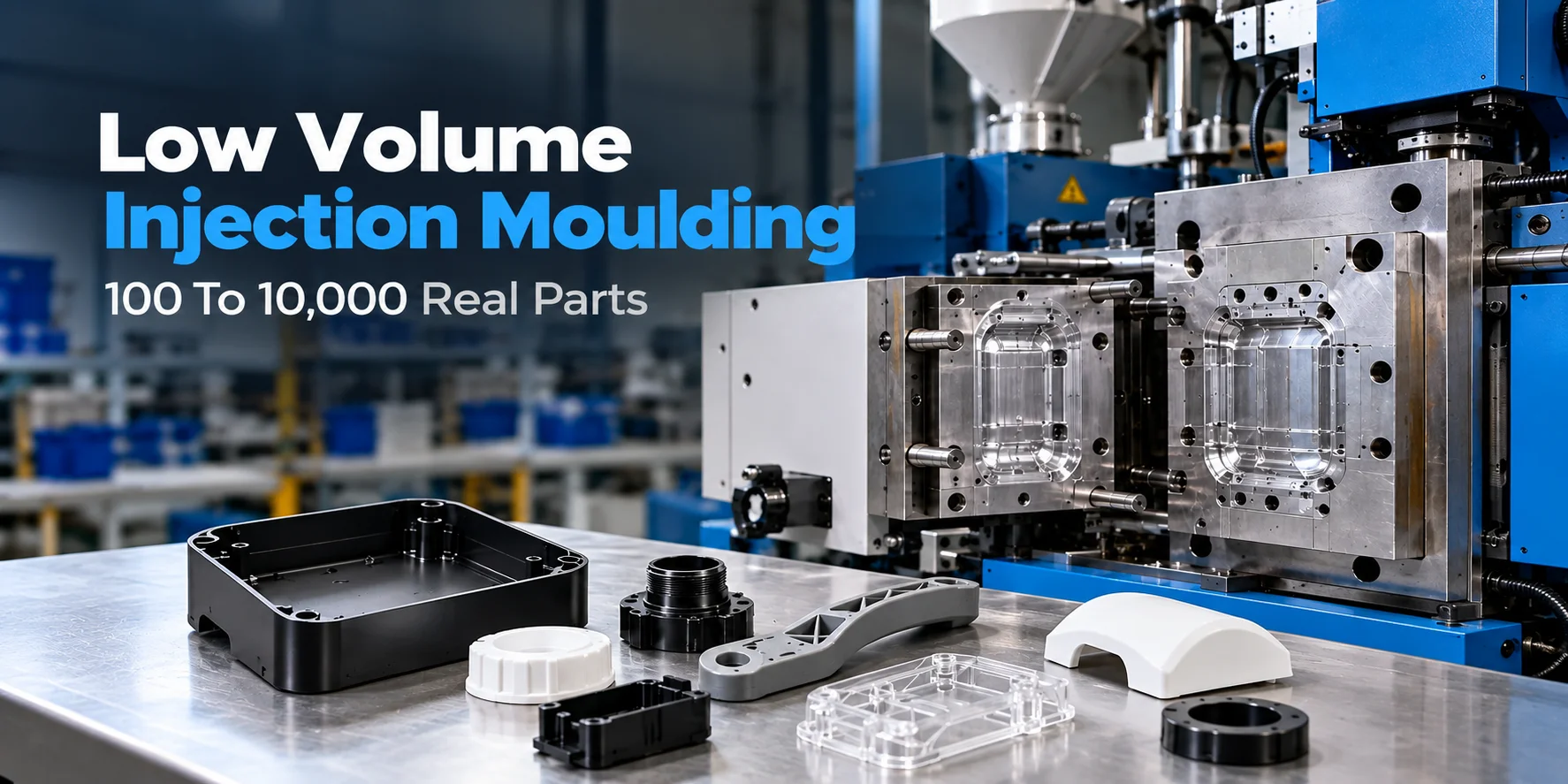
Why Bridge Tooling Beats Prototyping And Full Production
The right choice when 3D printing gets too expensive at volume and steel production tooling feels too risky too early.
100 To 10,000 Parts
The sweet spot between vacuum casting, which suits 1 to 50 parts, and full production injection moulding at 10,000 parts and beyond.
Aluminium Bridge Tooling
Tooling ready in 3 to 5 weeks from around ₹1,50,000, a fraction of what hardened steel production tooling costs.
Production Grade Polymers
Genuine engineering plastics, ABS, PC, PP, Nylon and PC ABS, moulded to production specifications rather than a prototype substitute.
Validates Before You Scale
Prove your market with 1,000 retail ready parts before committing lakhs of rupees to hardened production tooling.
Same Polymer, Same Process
Unlike vacuum casting or 3D printing, low volume injection uses the exact polymer and process you will scale to later, so there are no surprises.
GST Compliant Invoicing
Clear, itemised tooling and per part invoicing, GST compliant throughout, with tracked dispatch anywhere in India.
How A Low Volume Injection Programme Runs
A clear, engineer managed process from your first quote through to product landing in your warehouse.
Quote With Target Volume
Tell us your part design, polymer choice and how many you need. We quote aluminium tooling and per part price together.
DFM And Aluminium Tooling
A standard design for manufacturing review, followed by a single or multi cavity aluminium tool cut in 3 to 5 weeks.
T1 Sample, Sign Off, Run
First shot parts are inspected and signed off by you. Production then runs in batches sized to your release schedule.
Finish, Pack, Dispatch
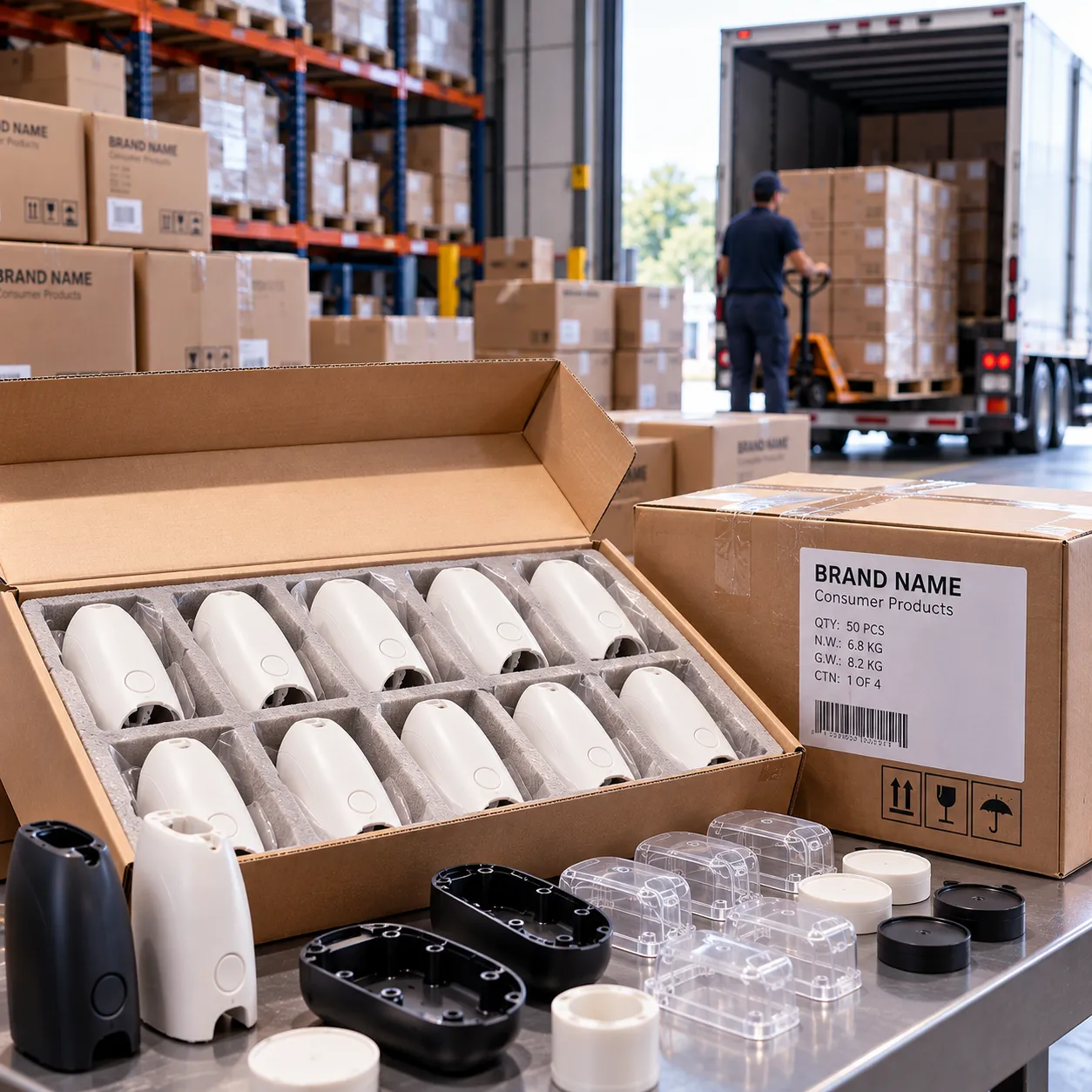
Pad printing, hot stamping, assembly, kitting and freight handled to your specification, shipped direct or to your warehouse.
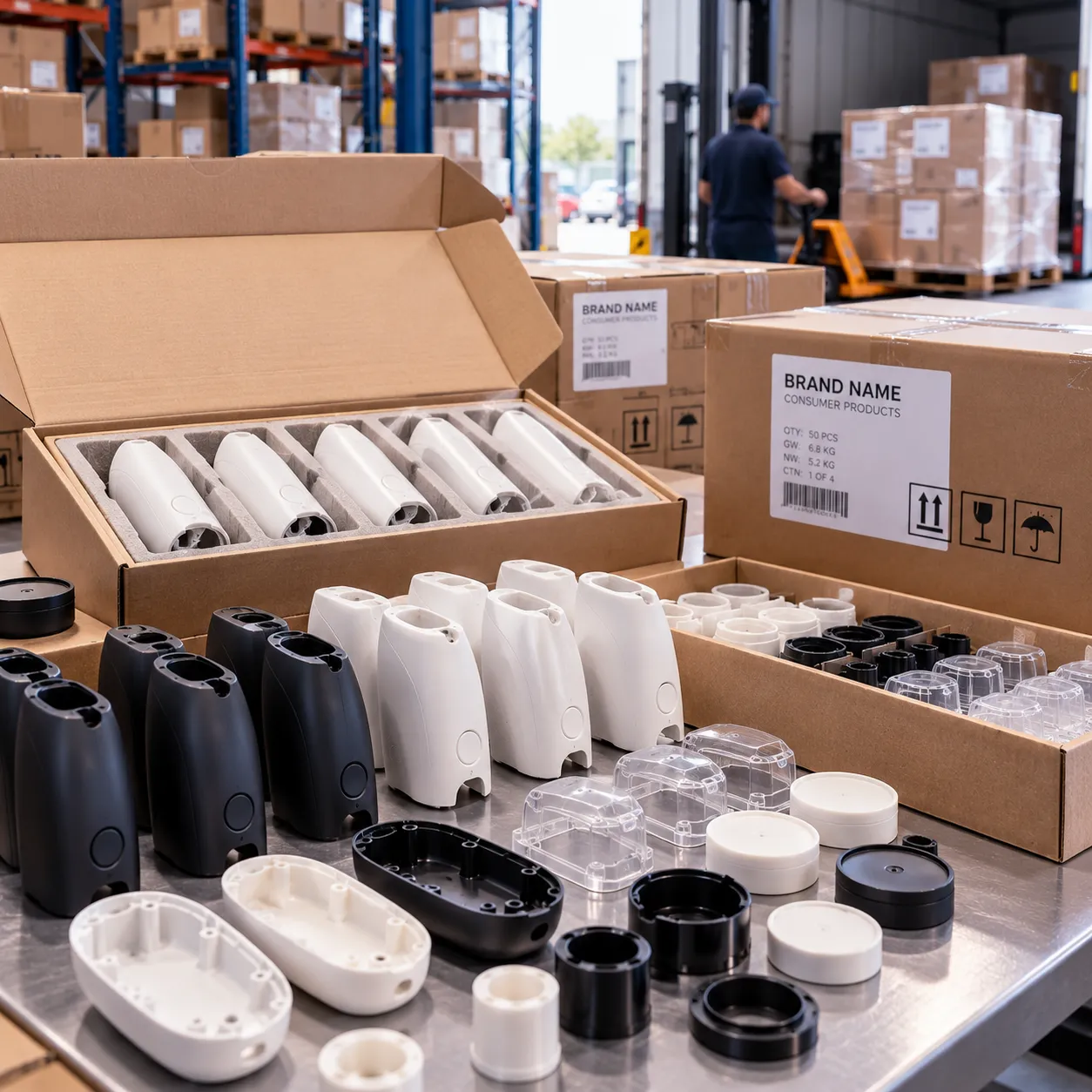
Real Production Parts, Without A Production Scale Tooling Commitment
Low volume injection moulding sits in the precise sweet spot between prototyping and mass production. You get real injection moulded parts in the exact polymer, with the exact surface finish and exact mechanical properties you would have at 100,000 units, but with tooling costs and lead times that make sense at launch volumes. It remains the most effective way to validate a product in market before committing to full production tooling.
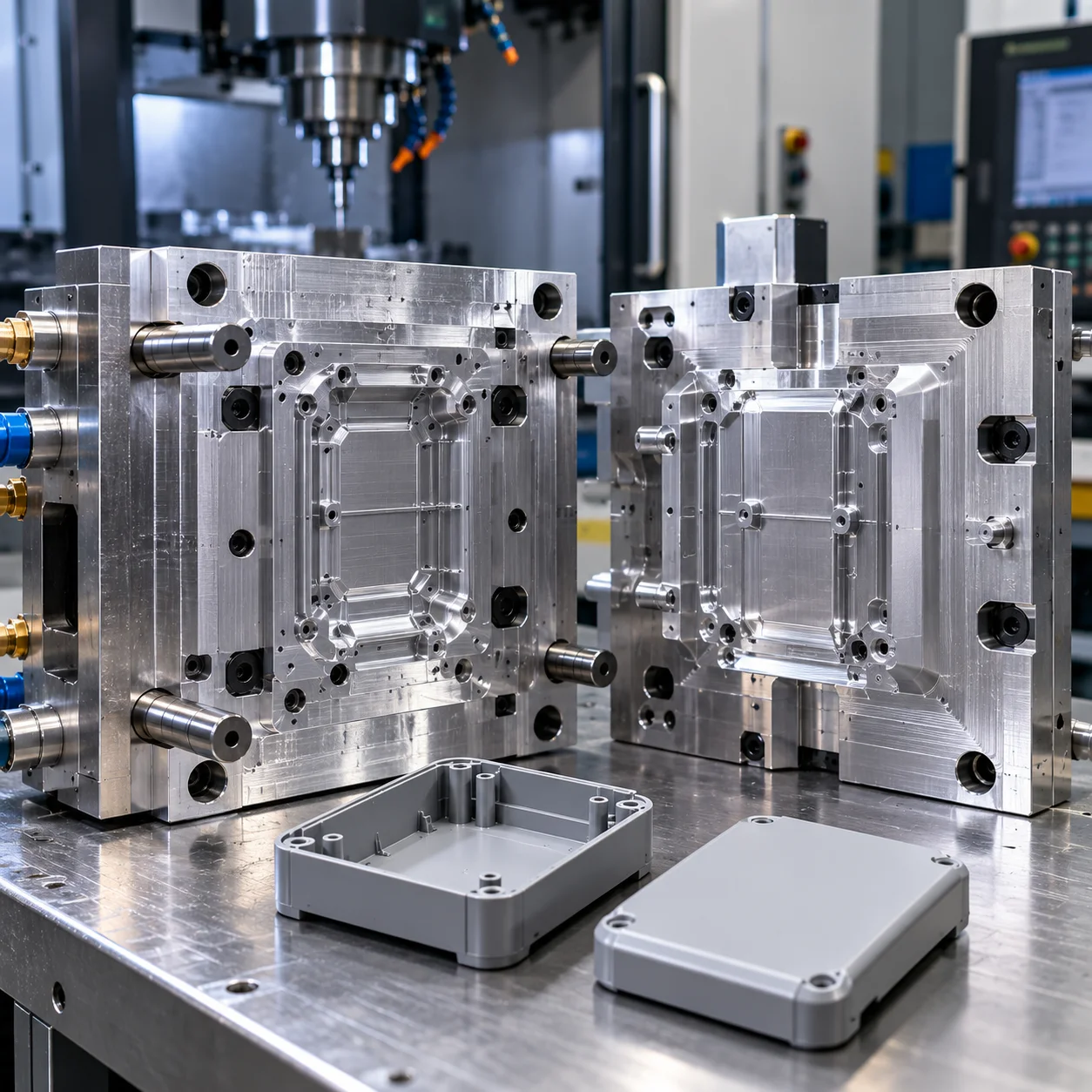
Aluminium bridge tooling cut in 3 to 5 weeks, starting from around ₹1,50,000
Genuine production polymers, ABS, PP, PC, Nylon, PC ABS and ASA
T1 sampling and dimensional approval before any production run begins
Pad printing, hot stamping, in mould labelling and assembly available
Same part dimensions and finish as a future hardened steel production tool
Designed for a clean migration to hardened tooling once volume justifies it
Polymers We Mould On Bridge Tooling
Real production polymers, not prototype substitutes, run on the same aluminium tool from your first batch onward.
ABS
Tough, paintable and plateable. The default choice for housings, consumer electronics and toys.
Polypropylene (PP)
Living hinge capable and chemically resistant. Suits caps, closures and fluid containers.
Polycarbonate (PC)
Optically clear and impact resistant. Used for lenses, light covers and transparent enclosures.
Nylon (PA6, PA66)
Tough and wear resistant. Suits gears, bearings and structural components under load.
PC ABS
Blends PC heat resistance with ABS toughness, common in automotive trim and rugged electronics.
ASA
UV stable thermoplastic for outdoor and automotive exterior parts that will not yellow over time.
Over 15 additional engineering polymers are available on request, including food contact and glass filled grades.
Where Low Volume Injection Wins
Anywhere you need real moulded parts in quantities of 100 to 10,000, without committing to full production tooling.
Product Launches
Validate market demand with 500 to 5,000 launch units before committing to hardened steel production tooling.
Niche Consumer Brands
D2C brands and crowdfunded launches that need real moulded parts but do not yet need 100,000 of them.
Medical Device Trials
Clinical trial quantities of moulded device housings, fluid components and disposables, in production equivalent polymers.
B2B And Industrial Spares
Replacement covers, knobs and brackets for installed industrial equipment, typically 50 to 500 parts per release.
Film And Limited Edition
Limited run prop manufacturing and special edition consumer products in genuine injection moulded plastic.
Bridge To Full Production
Run on aluminium tooling while hardened steel tooling is being cut, so you keep selling product without a gap in inventory.
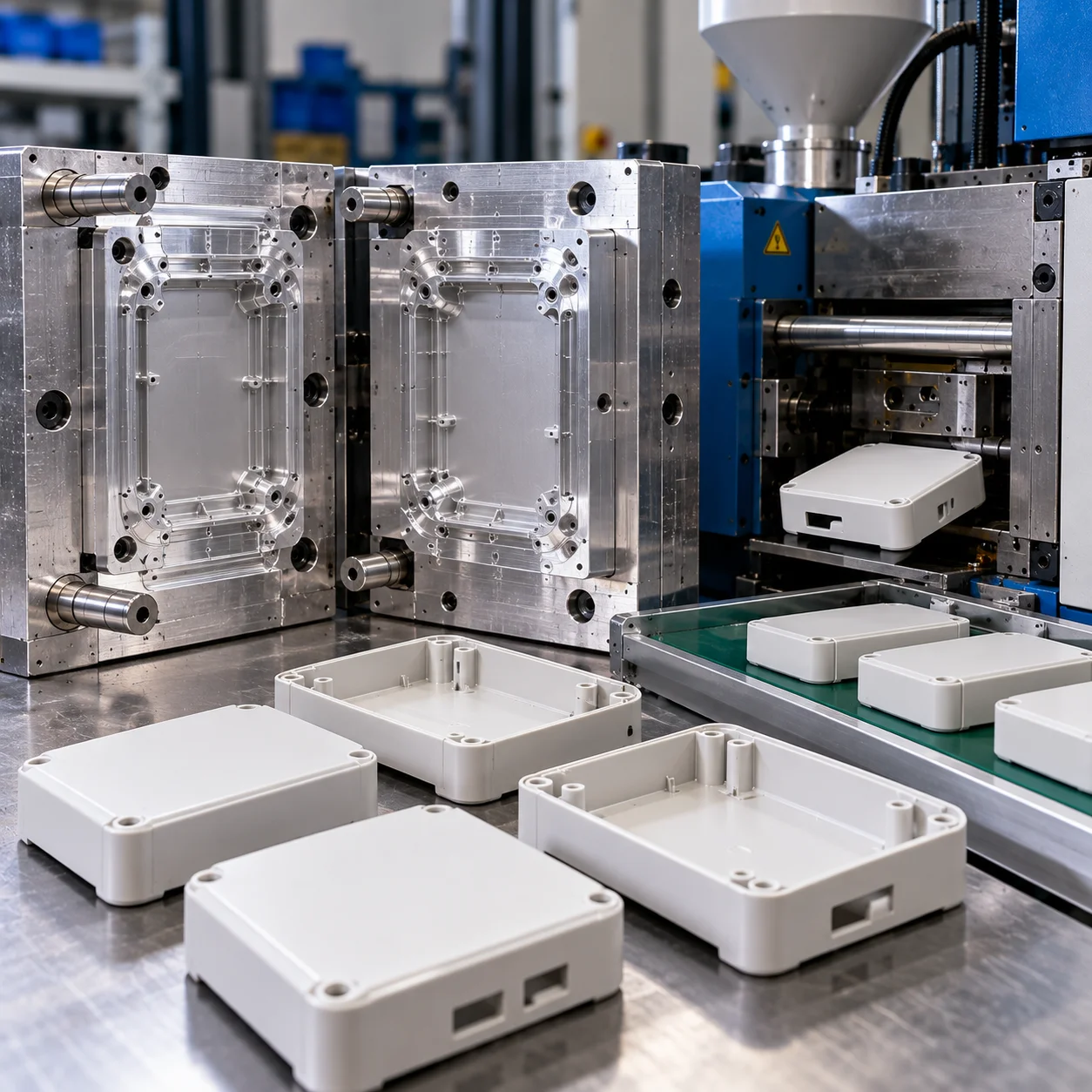
Recent Low Volume Programmes
Frequently Asked Questions
Aluminium bridge tooling typically runs 20 to 40 percent of the cost of hardened steel, roughly ₹1,50,000 to ₹4,00,000 versus ₹8,00,000 or more for steel. Per part price is similar or slightly higher, since aluminium tooling runs a slower cycle time.
A conservative estimate is 5,000 to 10,000 shots before wear starts to show. Gentler polymers such as ABS, PP and PC are easy on the tool and routinely go beyond 10,000 cycles, while glass filled materials will wear the cavity faster and shorten that number.
Yes, and it is a common path for our clients. The aluminium tool is designed from the outset with that migration in mind, so the parts it produces are dimensionally identical to what a steel tool will produce later. Once the product is validated, we cut the hardened steel tool and switch production over without touching the part design.
ABS, PP, PC, Nylon, PC ABS and ASA cover most bridge tooling projects, with over 15 additional engineering polymers available on request, including food contact and glass filled grades.
Yes. Pad printing, hot stamp foil, in mould labelling, paint and clear coat are all coordinated for you, alongside ultrasonic welding, snap fit assembly and kitting.
Tooling itself takes 3 to 5 weeks. T1 sampling and your approval add roughly a week, and the production run adds another 1 to 3 weeks depending on quantity. End to end, from an approved CAD file to parts in hand, most programmes land somewhere between 6 and 10 weeks.
Ready To Start Your Low Volume Run?
Upload your file or send a quick brief. Most quotes come back within four working hours, with parts dispatched pan India from our production facility.